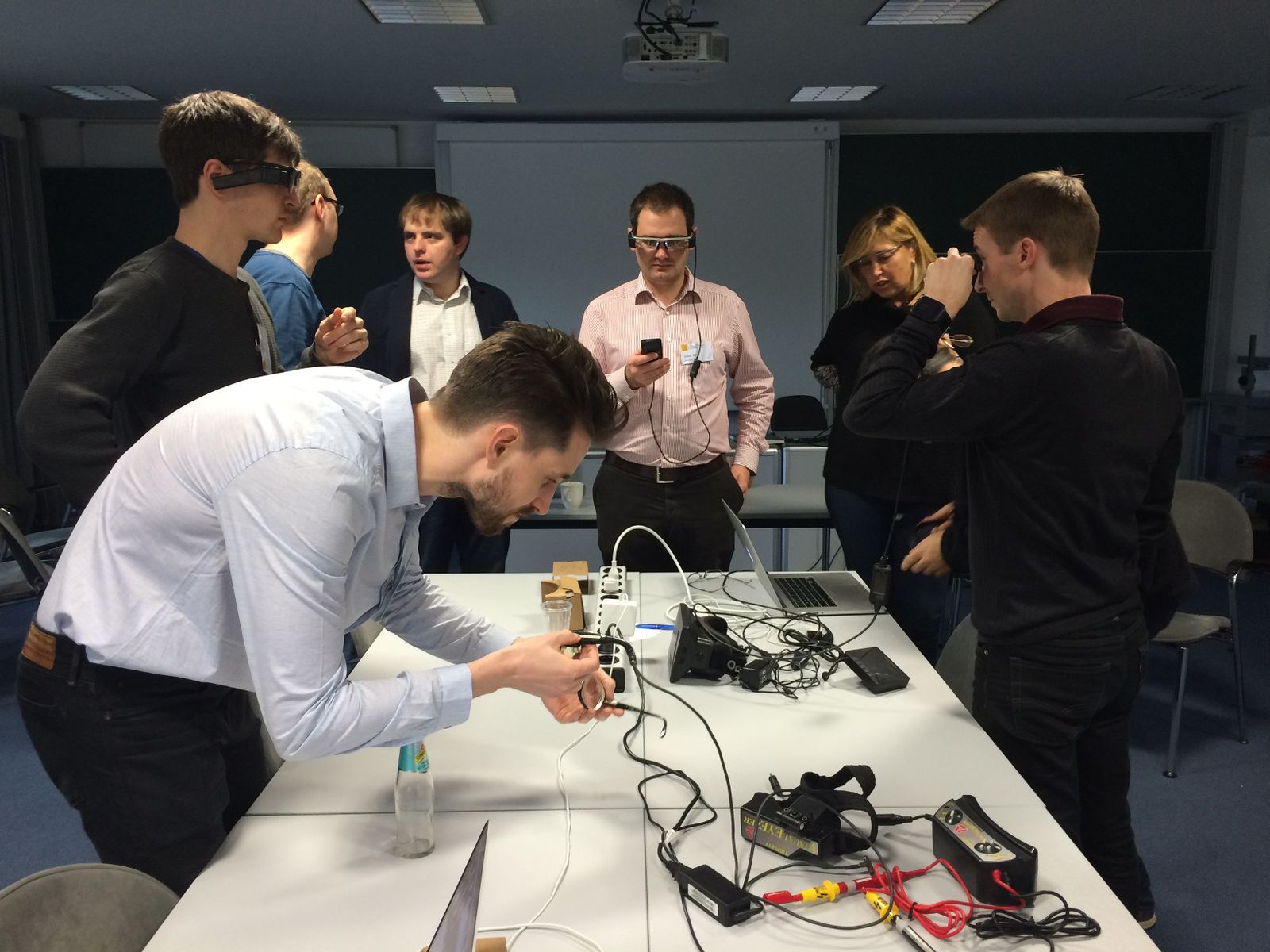
We took a risk in organizing the Eyewear Computing Seminar as we deviated largely from the standard model, yet I believe it payed off. As mentioned our seminar on Eyewear Computing was quite different from some other seminars, as we focused more on hands-on tutorials and prototyping than on talks and academic discussions. The seminar included workshops and tutorials on eye tracking (optical and EOG), egocentric vision, optics, and head-mounted displays.
We limited the introduction talks to 3 minutes per person each and static slides. This was the first seminar I attended with no delays regarding the introduction talks. The hands-on tutorials meant an additional burden for the organizers as they needed to bring hardware etc. However, it was very well received and in addition it stimulated research discussions with quick hack sessions to try out ideas. This was the first Dagstuhl Seminar where we could start recording some initial datasets for exploring concrete research ideas.
Thanks again to Andreas Bulling, Ozan Cakmakci and Jim Rehg; amazing co-organizers. It’s impressive for me to see how much time they made in their busy schedules and how professional they worked on the seminar.
Source: geist.pro, archived copy (30 March 2018).